

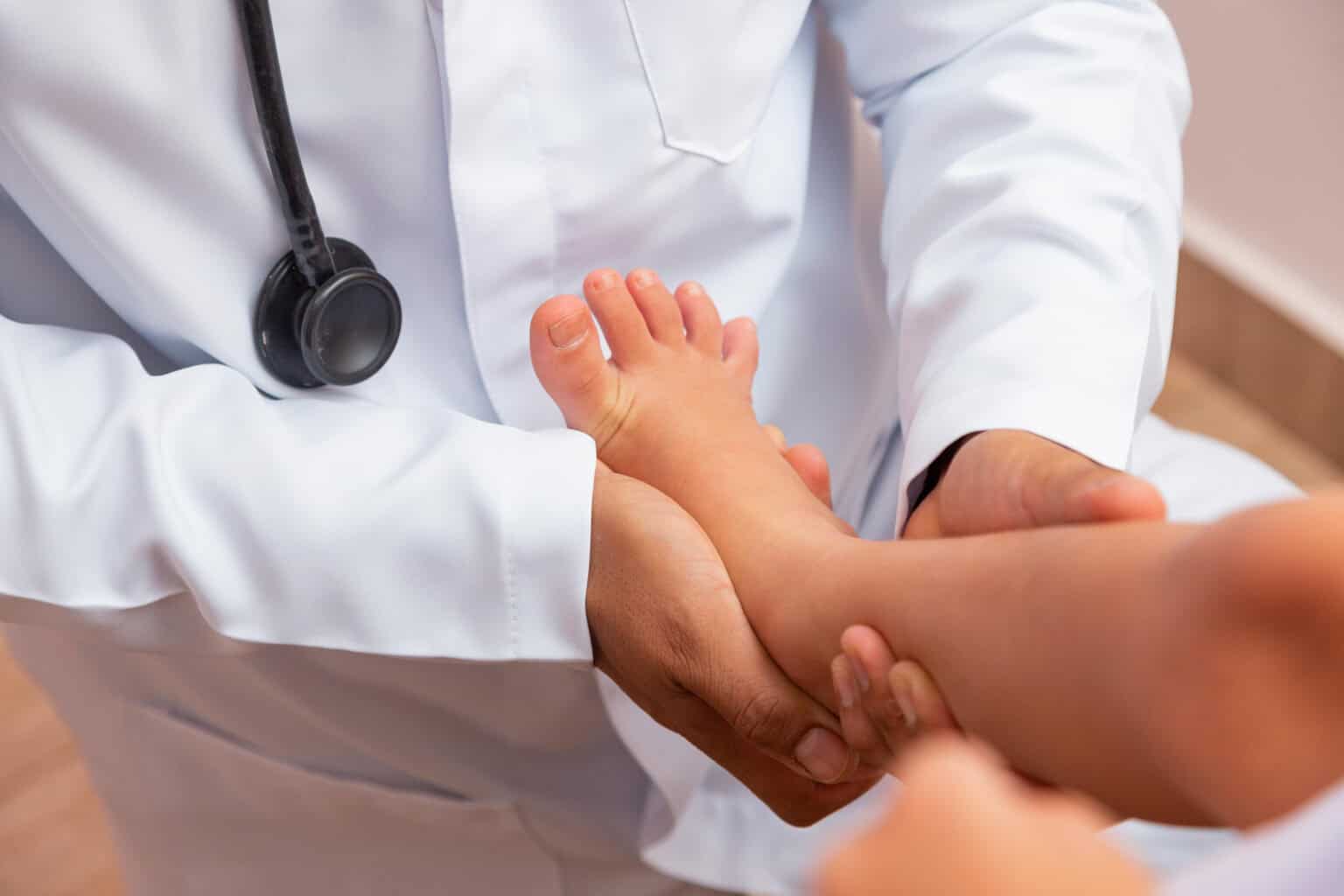
What every parent should know about children’s foot development, common conditions, and when to call a podiatrist.
Children are constantly on the move; running, jumping, climbing, and growing at a pace that can be hard to keep up with. Their feet are doing all of that work while also undergoing a remarkable developmental process that spans the first two decades of life. Yet foot health is one of the most overlooked aspects of pediatric care, with many parents unsure of what is normal, what to monitor, and when a visit to the podiatrist is warranted.
At Yeargain Foot & Ankle, we see children of all ages and understand that a visit to the doctor can feel intimidating for young patients. Our goal is always to make every child feel comfortable, informed, and at ease, while giving parents the answers and reassurance they need. This guide is a starting point for every parent who wants to give their child the best possible foundation, literally!
Why Children’s Foot Health Matters
The feet are the foundation of the entire musculoskeletal system. Problems that begin in the feet during childhood – whether structural, developmental, or the result of improper footwear – can have a ripple effect on the ankles, knees, hips, and lower back as a child grows. Addressing these issues early, when bones and soft tissues are still developing and most responsive to intervention, produces far better outcomes than waiting until adulthood.
Beyond structural concerns, foot pain and discomfort have a direct impact on a child’s quality of life. A child who avoids physical activity because their feet hurt may fall behind in physical development, miss out on social engagement through sports and play, and develop habits of inactivity that are difficult to reverse. Early podiatric care is not just about feet — it is about keeping kids active, confident, and thriving.
How Children’s Feet Develop
A newborn’s foot is made almost entirely of cartilage. Over the first two decades of life, that cartilage gradually ossifies — hardening into the 26 bones of the adult foot. Understanding this process helps parents recognize what is developmentally normal at each stage and what warrants a closer look.
Infancy (0–18 months)
Feet appear flat and chubby due to fat padding. Bones are mostly cartilage. Barefoot time on safe surfaces supports natural sensory development and muscle strengthening.
Toddler years (2–4 years)
The arch begins to emerge as the fat pad thins. Mild intoeing (pigeon-toe) and outtoeing are common and usually self-correcting at this stage. First shoes should be flexible and minimally structured.
School age (5–10 years)
Arch development accelerates. Growth spurts can trigger heel pain (Sever’s disease). Shoe fit becomes increasingly important as feet grow rapidly and activity levels increase.
Adolescence (11–18 years)
Growth plates are active and vulnerable to injury. Sports injuries, heel apophysitis, and structural issues like bunions may begin to appear. This is also when foot care habits established in childhood really start to matter.
Because the foot is still developing throughout childhood and into the late teens, conditions caught and treated early are typically much more manageable than those left to progress. If you notice your child limping, avoiding certain activities, or frequently complaining of foot or leg discomfort, a podiatric evaluation is a smart and proactive step.
Common Pediatric Foot Conditions
While every child is different, certain foot conditions appear frequently in pediatric podiatric care. The table below outlines the most common, what to look for, and how they are typically managed.
| Condition | Age commonly seen | Key signs | Typical management |
|---|---|---|---|
| Flat feet (pes planus) | Toddler through teen | No visible arch when standing; foot rolls inward | Observation or custom orthotics |
| Sever’s disease | 8–14 years | Heel pain during/after activity, especially in athletes | Rest, stretching, heel cups |
| Ingrown toenails | All ages; common in teens | Redness, swelling, pain along nail edges | In-office procedure; minor surgery if recurrent |
| Plantar warts | School age through teens | Rough growth on sole; black pinpoints | Cryotherapy or topical treatment |
| Intoeing / outtoeing | 1–8 years | Toes pointing inward or outward while walking | Usually self-resolving; monitor at visits |
| Juvenile bunions | 10–18 years | Bony bump at base of big toe; pain in shoes | Orthotics, wide shoes; surgery if severe |
| Ankle sprains | School age through teen | Swelling, bruising, tenderness after twisting | RICE protocol; evaluation if severe |
| Stress fractures | Active teens | Localized bone pain that worsens with activity | Rest, immobilization; imaging required |
Ingrown Toenails in Children: What Parents Need to Know
Ingrown toenails are one of the most frequent reasons children and teenagers visit a podiatrist. They occur when the edge of the toenail (most often the big toe) curves downward and grows into the surrounding skin, causing pain, redness, swelling, and sometimes infection. In children, the causes are often a combination of genetics, improper nail trimming, and shoes that are too tight or too short.
Signs to watch for
- Redness or tenderness along the nail border
- Swelling or warmth around the toe
- Your child limping or reluctant to wear shoes
- Drainage or a foul smell, which are signs of infection
Common causes in children
- Cutting nails too short or rounding the edges instead of trimming straight across
- Tight shoes or socks that compress the toes
- Repetitive trauma from sports or physical activity
- Inherited nail shape or curvature
What we do
In-office treatment is quick and highly effective. For mild cases, partial nail trimming and soaking instructions may be sufficient. For recurrent or infected cases, a minor procedure under local anesthesia removes the problematic nail border permanently, with a very high success rate and minimal recovery time.
Many parents worry about bringing an anxious child in for a procedure. Our team has extensive experience making nervous young patients feel safe and understood. We explain every step in age-appropriate terms, work at the child’s pace, and take their comfort seriously throughout the entire visit.
Do not attempt home surgery: Attempting to dig out or cut deeply into an ingrown toenail at home significantly increases the risk of infection and can worsen the problem. If your child’s nail border is red, swollen, or draining, schedule an appointment rather than treating it at home.
Flat Feet and Arch Development
Nearly all toddlers appear flat-footed, and that is entirely normal. The fat pad on the inner sole of young children’s feet gives the impression of no arch, and true arch development does not typically become visible until around ages 4 to 6. For most children, arches develop naturally without any intervention.
However, flexible flat feet that persist beyond early childhood or rigid flat feet that do not flex when the child stands on tiptoe warrant professional evaluation. These can lead to fatigue, aching in the feet and legs, difficulty with physical activity, and altered gait patterns that place stress on the knees and hips over time.
Flexible flat feet
The arch disappears when standing but reappears when sitting or standing on tiptoe. This type is common and often well-tolerated. When symptoms are present, custom orthotics can provide support and relieve discomfort effectively.
Rigid flat feet
The foot remains flat in all positions, even on tiptoe. This is often associated with tarsal coalition (abnormal bone fusion) or other structural issues. Imaging and thorough evaluation are required. Treatment may include orthotics or, in some cases, surgical correction.
A helpful test: Ask your child to stand on their tiptoes. If an arch appears, their flat feet are likely flexible and will often respond well to conservative management. If no arch appears, a podiatric evaluation is a good idea regardless of whether they are currently experiencing symptoms.
Choosing the Right Footwear for Children
Footwear is one of the most important (and most frequently mismanaged) aspects of children’s foot health. Because children’s feet grow rapidly, sometimes a full shoe size in just a few months during peak growth periods, parents may feel pressure to buy shoes slightly too large to extend their lifespan, or may not notice when shoes have become too tight. Both mistakes can have real consequences.
What to look for
- About a thumb’s width of space between the longest toe and the tip of the shoe
- Wide, rounded toe box that does not compress toes
- Firm heel counter – the back of the shoe should not easily collapse inward
- Flexible forefoot that bends naturally at the ball of the foot
- Breathable materials such as canvas, leather, or mesh
- Lightweight construction – children’s shoes should not feel heavy
- Adjustable closures (laces or velcro) for a secure, customizable fit
What to avoid
- Buying shoes more than half a size too large
- Pointed or narrow toe boxes that squeeze the toes together
- Shoes with excessive heel elevation or very rigid soles
- Hand-me-down shoes that have conformed to another child’s foot shape
- Keeping shoes too long – check fit every 2–3 months for growing children
When to measure again: Children under age 3 should have their feet measured every 2–3 months. Children ages 3–5 every 3–4 months. School-age children every 4–6 months. Always measure both feet and fit to the larger foot.
Sports and Activity-Related Foot Injuries in Children
Youth sports participation has increased dramatically in recent decades, and with it, so have pediatric foot and ankle injuries. Children and teenagers are at particular risk because their growth plates (areas of developing cartilage near the ends of bones) are more vulnerable to injury than fully fused adult bone.
Sever’s disease (calcaneal apophysitis)
The most common cause of heel pain in active children ages 8 to 14, Sever’s disease occurs when the growth plate at the back of the heel becomes inflamed due to repetitive stress and the pulling of the Achilles tendon. It is especially common in soccer players, runners, and gymnasts. Treatment focuses on activity modification, stretching, heel cups or orthotics, and in some cases, a temporary reduction in training load.
Ankle sprains
Ankle sprains are extremely common in young athletes, particularly in sports involving cutting, jumping, and uneven surfaces. While most sprains heal well with rest, ice, compression, and elevation, severe sprains involving ligament tears or growth plate damage require prompt evaluation. Children whose ankle sprains are not properly treated may develop chronic instability.
Stress fractures
Repetitive loading without adequate recovery can cause tiny cracks in the bones of the foot. Stress fractures are most common in the metatarsals and present as localized pain that worsens with activity and improves with rest. Imaging is required for diagnosis. Treatment involves a period of protected weight-bearing and activity restriction.
Turf toe and toe injuries
Jamming or hyperextending the big toe – common in football, soccer, and wrestling – can cause ligament sprains at the base of the toe. These injuries are often underestimated and may require podiatric evaluation if pain or stiffness persists beyond a few days.
Growth plate injuries: Any significant impact or twisting injury in a child that causes persistent pain at or near a joint — particularly the ankle, heel, or midfoot — should be evaluated promptly. What looks like a sprain in an adult may involve a growth plate fracture in a child, which requires different management.
When to See a Podiatrist for Your Child
Routine check-ups with your pediatrician will catch many issues, but some foot and ankle concerns are best evaluated by a specialist. We recommend scheduling an appointment with Yeargain Foot & Ankle if your child experiences any of the following:
- Persistent foot or heel pain that lasts more than a few days or limits activity
- A noticeable limp or change in the way your child walks or runs
- Complaints of leg pain, knee pain, or hip pain that may relate to foot mechanics
- Flat feet that remain flat on tiptoe or that cause pain or fatigue
- An ingrown toenail that is red, swollen, draining, or recurrent
- Warts, rashes, or unusual growths on the foot
- One foot that appears noticeably different in shape, size, or function from the other
- Any injury involving significant swelling, bruising, or inability to bear weight
You do not need to wait for symptoms to become severe. Our doctors are experienced with pediatric patients and can provide reassurance when things are normal, or catch issues early when they are not.
What Our Patients’ Parents Say
★★★★★ Google Review
Took my 12 year old and absolutely loved how they treated her. They made her feel very comfortable and explained everything that needed to be done during the visit. I would definitely recommend them to everyone!!
— Verified Google Review — Yeargain Foot & Ankle Patient
★★★★★ Google Review
He was the BEST with my son’s ingrown toenail issues. My son was very nervous and he was a pro in handling that. Highly recommend this doc for adults and children alike!
— Verified Google Review — Yeargain Foot & Ankle Patient
Everyday Foot Care Habits for Kids
Building good foot care habits early sets children up for a lifetime of healthy, pain-free activity. Here are the most impactful habits to establish at each stage of childhood:
Daily habits
- Wash feet daily with soap and water; dry thoroughly between toes to prevent fungal infections
- Trim toenails straight across – never round the edges – to prevent ingrown nails
- Check feet regularly for blisters, cuts, warts, or any changes in skin or nails
- Rotate shoes so they can dry out fully between wears
At school and during sports
- Always wear properly fitted shoes and moisture-wicking socks for physical activity
- Use flip-flops or sandals in communal showers, locker rooms, and around pools
- Replace athletic shoes every 300–500 miles or when the sole shows significant wear
- Encourage children to speak up when shoes feel too tight or their feet hurt
Supporting healthy development
- Allow barefoot time at home on safe surfaces; this strengthens foot muscles and improves balance
- Avoid excessive use of rigid shoes in infants and toddlers who are just beginning to walk
- Schedule podiatric check-ups if your child is very active in sports or has a family history of foot problems
Frequently Asked Questions About Pediatric Foot Care
At what age should I take my child to a podiatrist for the first time?
There is no set age, the right time is whenever you have a concern. That said, it is reasonable to have a baseline evaluation if your child begins walking significantly later than peers, walks on their toes, complains of recurring foot or leg pain, or has a family history of significant foot problems. Many children are first seen by us in the elementary school years for issues like heel pain, warts, or ingrown toenails.
Is it normal for my toddler to walk on their toes?
Occasional toe walking in toddlers under age 2 is common and typically not concerning. If it persists past age 3, is present more than 50% of the time, or is accompanied by muscle tightness, a podiatric or developmental evaluation is recommended. Persistent toe walking can sometimes be associated with tightness in the Achilles tendon or other underlying conditions.
My child has flat feet but does not complain of pain. Do I still need to bring them in?
Not necessarily, but it depends. Flexible flat feet that cause no symptoms and do not affect activity are often monitored rather than treated. However, a one-time evaluation is worthwhile to establish a baseline, confirm the feet are flexible, and rule out any structural issues. If symptoms develop later, you will already have an established relationship with a provider who knows your child’s feet.
How do I know if my child’s shoes fit correctly?
There should be about a thumb’s width of space between your child’s longest toe and the end of the shoe. The widest part of the shoe should align with the widest part of the foot without pinching. The heel should fit snugly without slipping. Have your child walk and ask if anything rubs or feels tight. Children’s feet should be measured standing, not sitting, and both feet should be measured every few months.
Can children get bunions?
Yes. Juvenile bunions (also called adolescent bunions) can develop in children as young as 10, particularly in girls and in those with a family history of bunions or certain foot types (such as hypermobile flat feet). Unlike adult bunions, juvenile bunions involve bones that are still growing, which can make them more complex. Early evaluation and conservative management can often slow progression and delay or avoid the need for surgery.
What is Sever’s disease and is it serious?
Sever’s disease is the most common cause of heel pain in active children aged 8 to 14. Despite the name, it is not a disease. It is an inflammation of the growth plate at the back of the heel, caused by repetitive stress during a growth spurt. It is very treatable and does not cause long-term damage. Most children recover fully with a combination of rest, stretching, proper footwear, and heel cups or orthotics. Symptoms typically resolve entirely once the growth plate closes, usually by mid-adolescence.
Give Your Child the Best Start — Schedule an Appointment Today
At Yeargain Foot & Ankle, we genuinely love working with our youngest patients. Whether your child needs treatment for a specific condition or you simply want an expert set of eyes on how their feet are developing, our doctors are here to help.
Schedule your appointment today! Call our office or book online.