

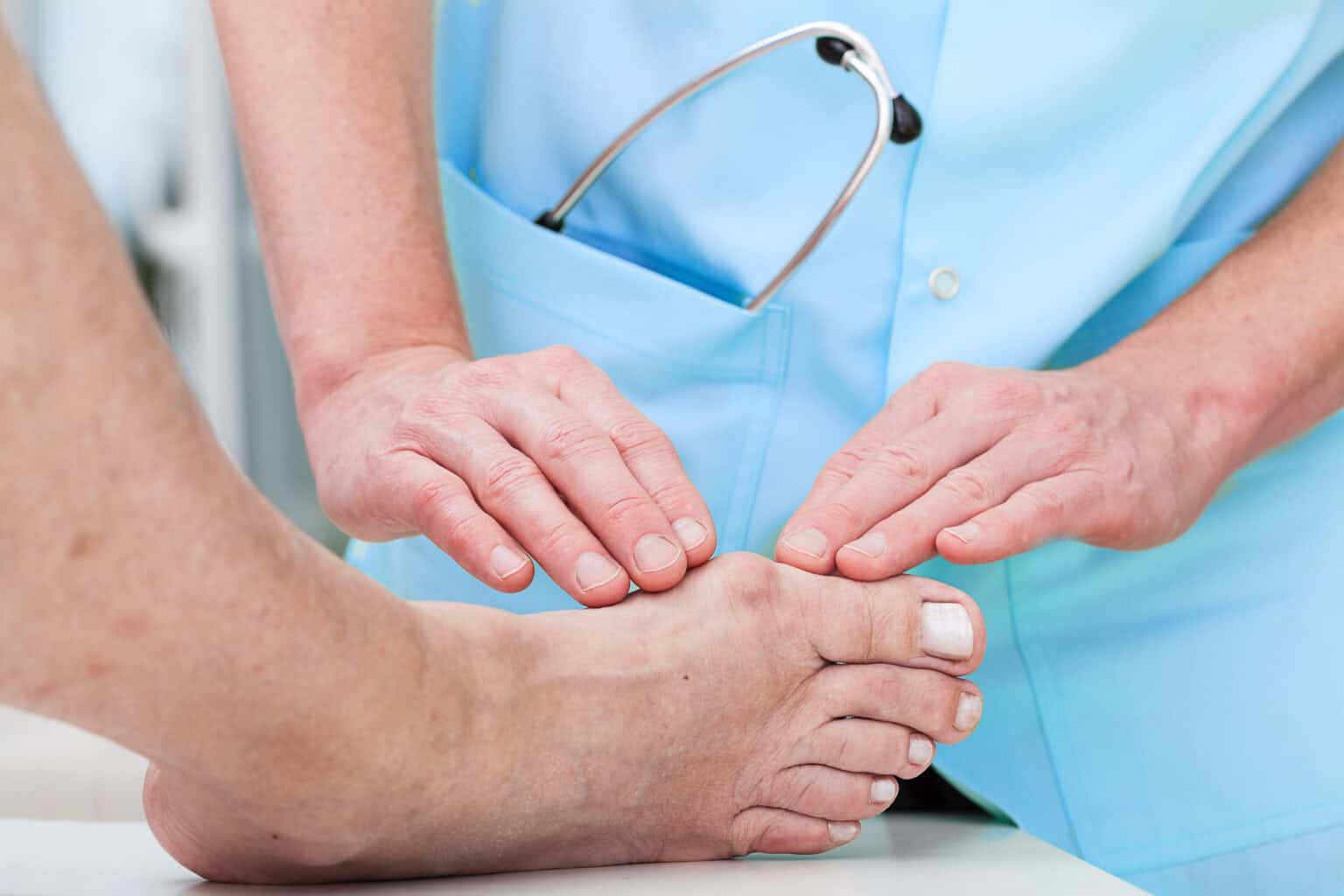
Maybe you’ve noticed the bump at the base of your big toe getting more noticeable. Maybe certain shoes have started to rub, or you find yourself reaching for the same comfortable pair every day. Bunions are extremely common, showing up in patients from their teens to their later years.
One of the most common questions we hear is simple: do I need surgery? The answer depends less on how your bunion looks and more on how it affects your daily life. Here’s how to tell the difference.
What a Bunion Really Is
A bunion looks like a bony bump, but it’s actually a change in how the big toe joint is aligned. The metatarsal, the long bone just behind the big toe, gradually leans toward the inside of the foot while the big toe stays in place. That shift creates an angle at the joint, and the bump is where the bone now sticks out.
Over time, a misaligned joint can wear down faster than a healthy one, including the cartilage that cushions it.
What Causes Bunions?
Bunions are primarily genetic. Shoes don’t cause them, though narrow shoes that squeeze the toes together can make symptoms worse. In other words, a bunion isn’t something you did wrong.
Once a bunion forms, it can’t be reversed on its own. That’s why care focuses on one of two goals: keeping you comfortable, or correcting the alignment.
Common Symptoms
Small bunions may not cause any pain at all. When symptoms do show up, they often include:
- A bony bump at the base of the big toe
- Soreness, swelling, or rubbing where shoes press against the bump
- Irritated or roughened skin over the joint
- Trouble finding shoes that feel comfortable
- Discomfort when standing or walking for long periods
When Conservative Care Is Enough
Conservative care is about comfort. It can’t straighten the joint, but for many people it’s all they need, especially when the bunion is small or the pain comes and goes.
What you can do at home
- Choose shoes with a roomy toe box and skip narrow styles
- Wear sandals or shoes that don’t rub against the bump
- Add padded inserts to cushion the area
- Tape the foot to support and cushion the bunion
- Ice the area for about 15 minutes, several times a day
- Use over-the-counter pain relievers or anti-inflammatories as directed
What we can offer in the office
After an exam, and x-rays if needed to see how much bone is involved, our doctors build a plan around your lifestyle, activity level, pain, and bunion size. That plan may include:
- Custom orthotics or footwear for added support
- Night splints and other supportive devices
- Cortisone injections to reduce inflammation and pain
- Physical therapy and stretching to keep the joint moving
Conservative care is usually a good fit when pain is occasional, shoe changes bring real relief, and the bunion isn’t holding you back.
When It Isn’t: Three Questions to Ask Yourself
If symptoms keep coming back despite these steps, our doctors focus on how the bunion affects your life, not how it looks. Three questions help guide that conversation:
- Does it hurt every day?
- Does it limit my activity?
- Does it make decisions for me, like which shoes I wear or whether I skip a walk?
If you answer yes to any of these, it may be time to talk about surgery. For many foot conditions, our team works hard to avoid surgery. Bunions are different, because few non-surgical treatments address the underlying alignment. Surgery is often the most effective long-term option.
Timing matters, too. Because a misaligned joint can wear over time, getting evaluated sooner helps keep more treatment options open.
Surgical Option: Minimally Invasive Bunion Correction
When surgery makes sense, many patients are candidates for minimally invasive bunion surgery. Traditional bunion surgery opens the big toe joint. With the minimally invasive approach, the correction is made through small incisions and held in place with screws, without opening the joint.
That difference brings real benefits:
- The big toe joint keeps its movement, with no joint fusion
- Less scar tissue in the joint, which can mean less physical therapy
- A minimal scar on the side of the foot
- A typically faster recovery than open procedures
Most bunions can be corrected this way, though some may need a different procedure. Our doctors will recommend the right option for you after an exam and x-rays. For answers to common questions, read our FAQs on minimally invasive bunion surgery.
Understanding your options makes the decision easier. One patient shared:
“Dr. Agyen was amazing! He explained both treatment options and the procedure and made sure I was comfortable the whole time. He answered every question I had and was so knowledgeable. I highly recommend!”
Verified 5-star Google review
What Recovery Looks Like
Recovery from minimally invasive bunion surgery is typically faster than from a traditional open procedure:
- Most patients can bear weight the same day in a post-op shoe or boot
- Many return to regular shoes in about 4 to 6 weeks
- Driving and daily activities often resume sooner than after open surgery
Full recovery from bunion surgery generally takes 3 to 6 months, including physical therapy. Your provider will build a recovery plan around your procedure and lifestyle.
When to See a Podiatrist
Consider scheduling a visit if:
- Your bunion hurts most days
- It’s keeping you from walking, exercising, or activities you enjoy
- Finding comfortable shoes has become a struggle
- The bump looks red, swollen, or irritated
- You’ve tried shoe changes and padding without lasting relief
Find the Right Plan for Your Feet
Whether your bunion just needs better shoes or it’s time to talk about correction, our team of providers can walk you through every option and help you choose what fits your life.
Schedule an appointment at either of our two locations by calling or booking online.