

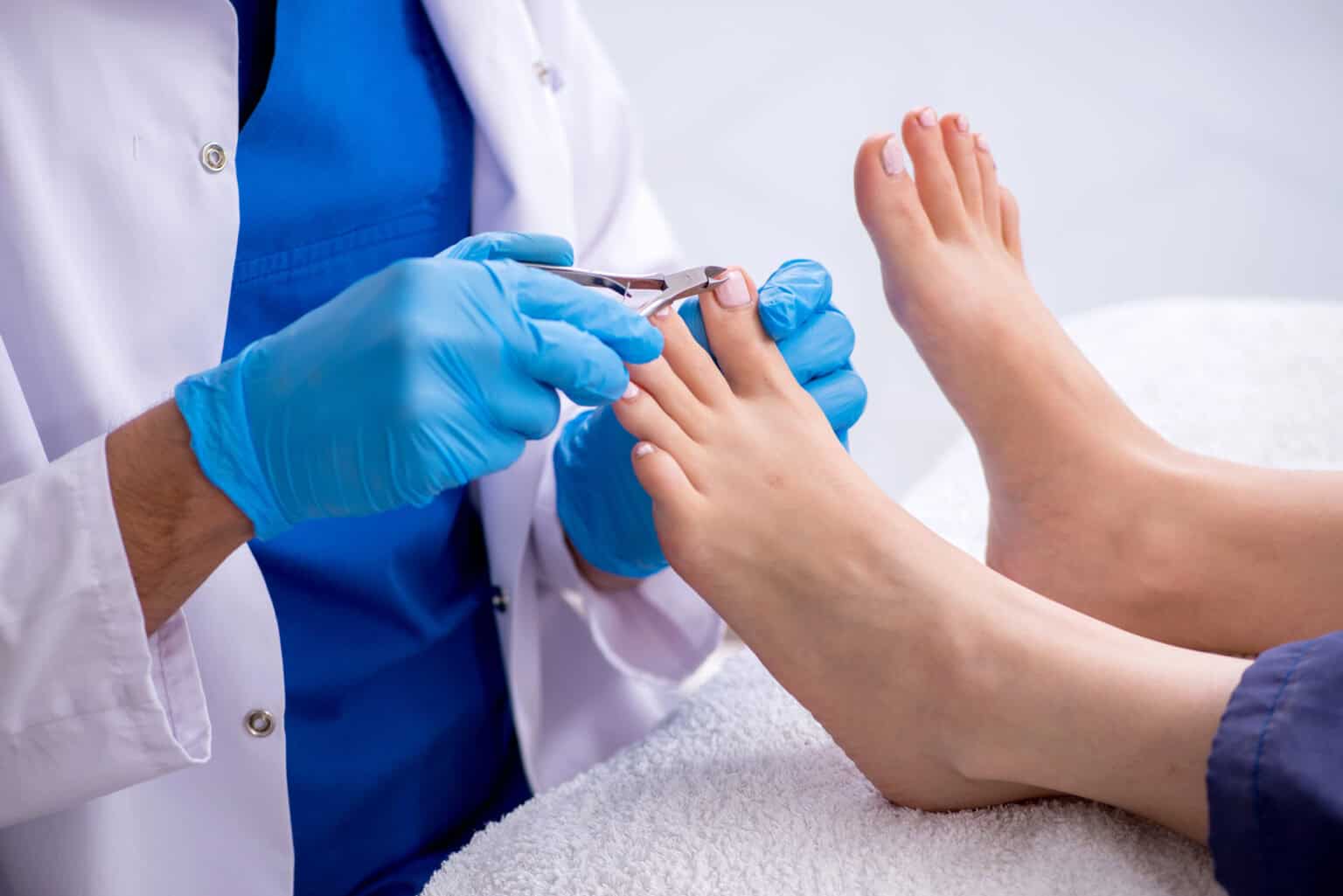
It usually starts small. The corner of your big toe feels a little tender, then a little red, and soon your favorite shoes are uncomfortable. It’s tempting to grab the clippers and try to dig out the problem yourself.
Ingrown toenails are one of the most common reasons people visit a podiatrist, and the in-office fix is quick and routine. Here’s what causes them, why at-home trimming tends to make things worse, and what treatment actually looks like.
What Is an Ingrown Toenail?
A toenail becomes ingrown when it curves down into the surrounding skin instead of growing straight out over it. The edge of the nail becomes embedded, which causes irritation and pain. Ingrown toenails can affect any toe, but they show up most often on the big toe.
Signs to Watch For
Ingrown toenails are usually easy to spot. Common signs include:
- Skin that appears to overlap the edge of the nail
- Redness, swelling, or firmness along the side of the nail
- Tenderness or pain when the area is touched or pressed by shoes
- Fluid building up around the toe
What Causes Ingrown Toenails?
The most common cause is genetics, which is why some people seem to get them again and again. Other factors that raise the risk include:
- Cutting toenails too short or at an angle
- Shoes that put pressure on the toes
- Sweaty feet or thicker nails, which are more common in older adults
- Sports that are hard on the toes, such as soccer, football, ballet, or kickboxing
- Swelling during pregnancy
Why Home Fixes Often Backfire
When an ingrown toenail hurts, cutting out the offending corner can feel like the obvious solution. The trouble is that it’s hard to see and reach the embedded edge, and trimming it yourself can push the problem deeper or open the door to infection.
Waiting it out isn’t much better. It’s possible for an ingrown toenail to resolve on its own, but it isn’t common. Seeing a specialist early is the most reliable way to get relief and protect the nail.
A Quick, Routine Fix in Our Office
Same-day treatment when you need it
Our doctors can treat an ingrown toenail the same day you come in. Some patients prefer to schedule the procedure for a time when they have a couple of days off work, and that works too. If the toe is infected, antibiotics may be needed before treatment.
What the procedure involves
First, the toe is numbed with two small injections. Your provider then cleans up the nail, trims the edges, and removes only the smallest portion needed to take out the ingrown section. While some offices remove the entire toenail, our team focuses on keeping as much of the nail as possible.
A small amount of a chemical solution is then applied to the treated corner so that section doesn’t grow back. The rest of the nail continues to look and feel normal, with the appearance kept in mind throughout.
A temporary option
If you have an important event coming up or can’t take time to recover, your provider may offer a temporary procedure that trims the nail without permanently treating the corner. This relieves the pain, though the ingrown portion may return.
Patients often tell us the experience was easier than they expected:
“Dr. Yeargain was great! I had a very painful infected ingrown toenail. I called the office and they fit me in the schedule immediately..same day. Dr. Yeargain is a very personable and professional doctor. He explained my options and took care of my issue with care right away. I highly recommend Dr. Yeargain as well as his staff; everybody was so nice and professional.”
Verified 5-star Google review
What Recovery Looks Like
Recovery is straightforward and can be managed at home:
- The toe is usually sore for a couple of days
- Full healing typically takes about three weeks
- You’ll soak the foot and change the dressing once a day
- We send you home with a dressing kit, so there’s no need for a pharmacy run
- A follow-up visit about two weeks later lets your provider check on healing
Can You Prevent Ingrown Toenails?
Not every ingrown toenail can be prevented, especially when genetics play a role. These habits can help lower the risk:
- Wear shoes that fit well and don’t crowd the toes
- Use a clean, sharp nail trimmer
- Trim nails following the natural curve of the toe, and avoid cutting them too short
If ingrown toenails keep coming back, our doctors will look at your full picture, including footwear and activities, and recommend changes that may help reduce the chance of recurrence.
When to Schedule a Visit
Consider booking an appointment if:
- The side of your nail is red, swollen, or tender
- Wearing shoes or walking has become uncomfortable
- You notice fluid or increasing redness around the nail
- You’ve already tried trimming it yourself and it isn’t improving
- Ingrown toenails are a recurring problem for you
Relief Can Be One Visit Away
An ingrown toenail doesn’t have to sideline you. Treatment is quick, done right in our office, and designed to keep your nail looking natural while it heals.
Schedule an appointment at either of our two locations by calling or booking online.